Solar Battery Guide
Everything you need to know about solar batteries — the types, how to size a system, lifecycle and maintenance, and practical tips for choosing the right solar battery for your home or business.
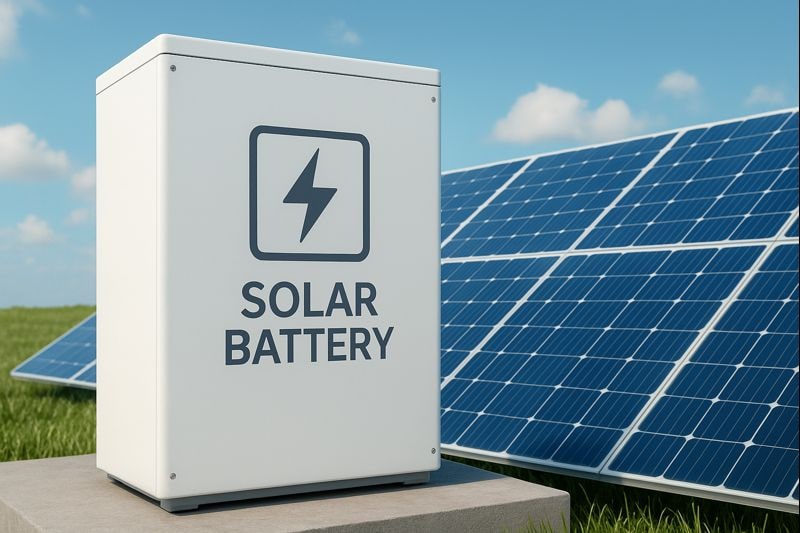
Everything you need to know about solar batteries — the types, how to size a system, lifecycle and maintenance, and practical tips for choosing the right solar battery for your home or business.
A solar battery stores the electricity your solar panels generate so you can use it later — at night, during outages, or when grid electricity is expensive. Solar batteries are a core part of modern solar-plus-storage systems and are measured by usable capacity (kWh), power output (kW), cycle life and round-trip efficiency.
This guide focuses on the most common solar battery types, sizing methods, and practical selection criteria to help you pick a reliable and cost-effective solution.
Mature, lower-cost chemistry with proven performance. Lead-acid batteries have shorter cycle life, lower usable depth-of-discharge, and require more maintenance than modern lithium solutions. They can still be a sensible option for low-cost, off-grid setups.
High energy density, long life, and excellent efficiency. Lithium-ion batteries power many residential and commercial systems today. They are compact, have high round-trip efficiency, and support fast charging and high discharge rates.
LFP combines long cycle life, thermal stability, and safety, making it a popular choice for residential and commercial solar storage. LFP batteries often offer lower lifecycle cost despite a modestly higher upfront price compared with older lithium chemistries.
Large-scale, durable option for long-duration storage. Flow batteries excel for multi-hour storage and frequent deep cycling but are currently more common in commercial/utility installations due to scale and cost.
A simple way to estimate battery size: multiply the number of hours of backup you want by your average hourly load.
Example: If you need 5 kWh/day and want 2 days of autonomy, choose a usable capacity ≈ 10 kWh. If using a battery with 80% DoD, install 12.5 kWh nominal capacity (10 kWh / 0.8).
Battery lifetime depends on chemistry, depth-of-discharge, temperature and charge patterns. LFP and modern lithium batteries typically provide 3000–6000 cycles or more, translating to 10–20+ years in many residential systems when managed correctly. Keep batteries in a temperature-stable environment and follow manufacturer maintenance recommendations.
Upfront battery costs vary widely. Residential battery systems commonly range from $6,000 to $20,000+ before incentives. Check federal, state, and local incentives or rebates that can significantly reduce net cost. Also consider lifecycle cost per kWh delivered when comparing options.
Modern lithium batteries are safe when installed to code and by certified electricians. Choose batteries with built-in management systems (BMS), thermal management, and appropriate certifications (UL, IEC). Proper ventilation and fire-safety planning are essential for installations inside buildings.
Not always. Batteries add resilience and increase self-consumption, but many grid-tied systems without batteries are cheaper and still reduce bills. Batteries make sense when backup power or time-of-use arbitrage matters.
LFP currently offers the best combination of long cycle life, safety, and stable capacity retention.
Depends on usable capacity and load. A 10 kWh usable battery running a 1 kW continuous load lasts about 10 hours; running more appliances shortens that time proportionally.
If you want a tailored recommendation, we can estimate the battery size needed for your home. Contact our team or use our calculators to convert load and backup targets into a right-sized solar battery system.